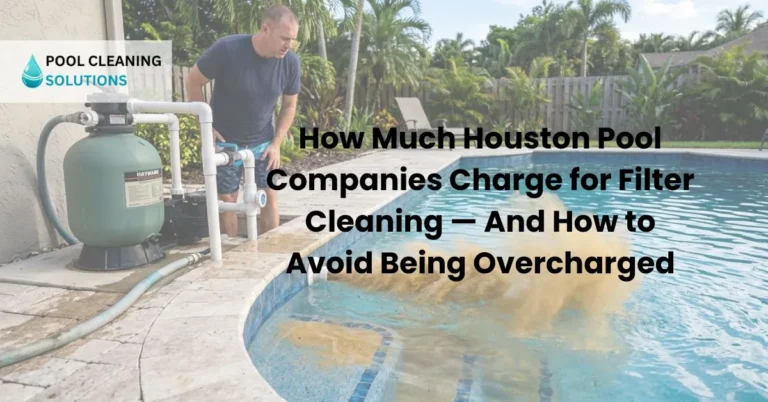
Cartridge filters cost the least effort to clean. Sand filters are cheapest to maintain long-term. DE filters give you the cleanest water but take the most time. In Houston, heat, pollen, and storm debris force every filter type to work harder and get cleaned more often.
Which Pool Filter Is Easiest to Clean in Houston?
Cartridge filters are the easiest to clean for Houston homeowners. You pull the cartridge out, rinse it with a garden hose, and put it back with no valve settings, no hose connections, no powder to add. Sand filters require backwashing, which involves flipping a multiport valve and running water in reverse. DE filters need backwashing plus a complete DE powder recharge after every cleaning session.
Houston’s combination of heat, spring pollen, and tropical storm debris puts every filter under extra stress. The combination of heat, pollen, and weather events in the Houston area can clog filters faster than usual. That means whatever type you have, you are cleaning it more often here than you would in most U.S. cities.
What Does Each Pool Filter Type Actually Do?
Understanding how each filter works tells you exactly why cleaning them differs.
Sand Filter:
Water is pushed down through a tank of silica sand. Dirt and debris get trapped in the sand bed. Sand filters are the cheapest to buy, usually $200 to $500 for a residential unit and the sand itself only needs replacing every 5 to 7 years. The catch is filtration precision. Sand catches particles down to about 20 to 40 microns, which means finer particles like pollen, algae spores, and some bacteria pass right through.
Cartridge Filter:
Water passes through pleated polyester fabric cartridges. The pleating increases the surface area dramatically, which means finer filtration at lower pressure typically 10 to 15 microns. No backwashing is needed. You remove the cartridge, rinse it, and reinstall it.
DE Filter:
Water passes through fabric grids coated with diatomaceous earth powder fossilized algae. DE filters have the finest filtration of the three types down to 2 to 5 microns. That’s fine enough to catch some bacteria, fine silt, and particles completely invisible to the eye. The trade-off is the most complex cleaning process of all three.
How Often Does Each Swimming Pool Filter Need Cleaning in Houston?
This is where Houston’s climate changes the math compared to national averages. Intense heat speeds up algae growth. Spring pollen clogs, pleats and grids fast. Summer storms dump debris into the water overnight.
| Filter Type | Routine Cleaning (Peak Season) | Deep Clean | Media Replacement |
| Sand | Every 1–2 weeks (backwash) | Annually | Every 5–7 years |
| Cartridge | Every 3–4 weeks (rinse) | Every 3 months | Every 2–3 years |
| DE | Every 3–4 weeks (backwash + recharge) | Annually (full teardown) | Grids: every 7–10 years |
Sand filters typically need backwashing about once a month in Houston, especially after storms or high pollen. DE filters require precise cleaning and new DE powder added after each service.
For cartridge filters in Houston’s warm Texas climate, a basic rinse every 3 to 4 weeks during peak swimming season is recommended. A more thorough deep clean is generally recommended every three months.
If you experience heavy storms or spring pollen events, add one unscheduled cleaning to your calendar for each event.
How Long Does Each Filter Cleaning Actually Take?
Time is the real hidden cost for Houston homeowners who maintain their own pools.
Sand Filter — Backwash:
10–15 minutes. You flip the multiport valve to backwash, run the pump until the sight glass clears, switch to rinse for 30 seconds, then return to filter mode. It is fast, but you waste 50–250 gallons of water each time.
Cartridge Filter — Basic Rinse:
20–30 minutes. Remove the cartridge, spray it down with a garden hose between every pleat fold, let it dry briefly, then reinstall. Most pool owners can handle a basic cleaning in about 30 minutes.
Cartridge Filter — Deep Clean (every 3 months):
45–90 minutes plus overnight soak. You soak the cartridge in a filter cleaning solution to break down oils, sunscreen, and mineral scale. A hose alone cannot remove these.
DE Filter — Backwash + Recharge:
20–30 minutes. Backwash until the sight glass clears, then add fresh DE powder back through the skimmer — typically 1 pound of DE per 10 square feet of filter area. You must wear a dust mask when handling DE powder.
DE Filter — Annual Full Teardown:
2–4 hours. You disassemble the entire filter, remove and soak all grids individually, inspect for tears, rinse thoroughly, reassemble, and recharge. Most Houston homeowners hire a pro for this job.
What Does Each Filter Cost to Maintain in Houston?
It depends upon multiple factors
Upfront Equipment Cost
| Filter Type | Unit Cost | Installed Cost (Houston) |
| Sand | $200–$500 | $250–$1,000 |
| Cartridge | $300–$800 | $300–$1,200 |
| DE | $500–$1,200 | $550–$1,700 |
Pool filter prices are $200 to $1,500 for the unit alone, depending on if it’s a sand, cartridge, or DE filter.
Ongoing Annual Costs (Houston Estimates)
Annual cost of pool filter cleaning in Houston
Sand Filter:
- Sand replacement every 5–7 years: $50–$350 per replacement
- Water cost for backwashing: Each backwash uses 50–250 gallons. At Houston’s municipal water rates, weekly backwashing adds $15–$40 per month to your water bill during peak season.
- Professional cleaning: Included in most monthly pool service plans ($100–$180/month in Houston)
Cartridge Filter:
- Replacement cartridge every 2–3 years: $30–$150
- Filter cleaning solution (quarterly): $15–$30 per bottle
- No water wasted on backwashing — this saves money compared to sand
DE Filter:
- DE powder (recharge after each backwash): $20–$40 per bag, used 8–12 times per year in Houston
- Annual full teardown (professional): $75–$150 per service call
- Grid replacement every 7–10 years: $100–$300
Monthly pool maintenance service in Houston typically costs $100–$180. This price includes weekly visits for chemical balancing, skimming, brushing, and filter maintenance.
How Does Houston’s Pollen Season Affect Each Pool Filter?
Houston has one of the longest and most intense pollen seasons in the U.S. Oak, pine, and cedar pollen hit from February through May. This directly affects how often you clean your filter and which filter handles pollen best.
Sand Filter + Pollen:
Sand filters catch particles down to 20–40 microns. Finer particles like pollen, algae spores, and some bacteria pass right through. During Houston pollen season, sand filter owners often deal with persistently hazy water even after backwashing.
Cartridge Filter + Pollen:
Cartridge filters catch particles down to 10–15 microns. That’s fine enough to catch most pollen, fine dust, and early-stage algae particles that a sand filter would miss. During pollen season, expect to rinse your cartridge every 1–2 weeks instead of every 3–4 weeks.
DE Filter + Pollen:
DE filters are the best option for pollen control. They trap particles down to 2–5 microns. DE filters are especially useful in Houston during high pollen periods. The trade-off is that heavy pollen loads also fill the DE media faster, triggering more frequent backwashes and DE powder recharges.
What Happens If You Skip Swimming Pool Filter Cleaning in Houston?
Houston’s heat and humidity accelerate every consequence of a dirty filter. Algae can take over a pool in 48–72 hours during summer if filtration is compromised.
A clogged filter forces your pump to work harder. That extra strain raises your electricity bill and shortens pump life. A hardworking pump uses more energy, leading to higher electricity bills. A clogged filter can’t do its job effectively, resulting in cloudy water and a less sanitary swimming environment.
Skipping cleaning also shortens media life. For cartridge filters, oils and minerals bond permanently to the pleats if not broken down regularly. Once a cartridge is oil-fouled, no amount of hosing restores it you replace it early at $30–$150.
Restoring a green pool to swimmable condition in Texas typically costs between $300 and $800 for chemical treatment. Severe cases requiring a full drain-and-clean run $500 to $1,500 or more. That cost is preventable with consistent filter maintenance.
Which Filter Is the Best Match for Houston Pool Owners?
There is no single correct answer; it depends on your priorities.
Choose a Sand Filter if:
- You want the lowest upfront cost and simplest backwash routine
- You have a large pool with heavy debris (leaves, dirt, landscaping)
- You do not mind slightly hazier water during pollen season
- You are comfortable with a weekly backwash and its water cost
Choose a Cartridge Filter if:
- You want the best balance of water clarity and low maintenance effort
- You want to save water (no backwashing)
- You care about Houston’s pollen problem and want noticeably clearer water
- You prefer a simple rinse-and-reinstall cleaning process
Choose a DE Filter if:
- Crystal-clear water is your top priority, no compromises
- You are comfortable with more complex maintenance or willing to hire a pro
- You want the best pollen and algae particle filtration available
- Your household has allergies or immune-sensitive swimmers
Maintenance Effort Ranked (Easiest to Hardest):
- Sand — easiest routine, but most water waste
- Cartridge — slightly more hands-on, but saves water and gives better clarity
- DE — most complex, highest ongoing supply cost, but best water quality
DIY vs. Professional Filter Cleaning in Houston Which is best?
DIY Sand Filter Cleaning:
Very doable. Backwashing takes 10–15 minutes and requires no special tools. Sand replacement every 5–7 years is a bigger job — most homeowners hire a pro for that.
DIY Cartridge Filter Cleaning:
Straightforward for routine rinses. Quarterly deep cleans require a cleaning solution soak but no special skills. Most Houston homeowners handle this themselves.
DIY DE Filter Cleaning:
Routine backwash plus DE recharge is DIY-friendly. The annual full teardown involves disassembling grids, soaking them in a cleaning solution for 12 hours, inspecting for tears, and reassembling. Many Houston homeowners hire a professional for the full teardown.
Houston pool service companies recommend cleaning cartridge filters every three to four months and diatomaceous earth (DE) filters every six months for professional service.
Pool cleaning cost in Houston, TX is $29 to $38 per visit for a typical home pool. A filter-only deep clean service call typically runs $75–$150 depending on filter type and condition.
Does It Matter If Your Houston Pool Is Above-Ground or In-Ground?
Yes. Your pool type directly affects which filter is practical and how you clean it.
Above-Ground Pools in Houston:
Above-ground pools in Houston are typically smaller 5,000 to 15,000 gallons. Smaller water volume means debris and pollen concentrate faster. Your filter gets dirty more quickly per gallon than a large in-ground pool.
Cartridge filters are the most popular choice for above-ground pools. They are compact, easy to remove for cleaning, and simple to store if you close the pool for a period. No multiport valve is needed. Sand filters also work for above-ground pools, but they require a backwash hose connection and a place to drain the waste water not always easy in a Houston backyard setup. DE filters are rarely used on above-ground pools because the size-to-cost ratio does not make sense for most homeowners.
Above-ground pool owners in Houston should also know: smaller filters clog faster during pollen season. A filter sized for a 10,000-gallon pool will hit its pressure limit quickly when oak pollen hits in March. Cleaning every 2 weeks instead of every 3 to 4 weeks is common during peak pollen months for above-ground pools.
In-Ground Pools in Houston:
In-ground pools in Houston typically run 15,000 to 35,000 gallons. Larger volume means the filter handles more water per cycle. A correctly sized filter for an in-ground pool can go longer between cleanings than an undersized or above-ground unit.
All three filter types sand, cartridge, and DE are standard on Houston in-ground pools. The choice comes down to the factors covered throughout this article: budget, water clarity goals, and how much maintenance time you want to spend.
In-ground pools also tend to have built-in plumbing that makes backwashing sand and DE filters easier. The waste line connects directly to a drain. Above-ground pools often require running a backwash hose across the yard, which is inconvenient and sometimes restricted by Houston’s HOA rules in certain neighborhoods.
Key Differences at a Glance:
| Factor | Above-Ground Pool | In-Ground Pool |
| Typical Volume | 5,000–15,000 gallons | 15,000–35,000 gallons |
| Best Filter Match | Cartridge (first choice), Sand | All three types work |
| DE Filter Practical? | Rarely — cost does not justify | Yes, common on larger pools |
| Cleaning Frequency (Houston Peak) | More often — smaller volume concentrates debris faster | Standard schedule applies |
| Backwash Drainage | Requires a hose run across yard | Connects to built-in drain line |
| Winter Storage | Cartridge filter easy to remove and store | Filters stay installed year-round |
| Pollen Season Impact | Higher impact per gallon | Lower impact — larger water volume dilutes debris load |
The bottom line: If you have an above-ground pool in Houston, start with a cartridge filter. It is the easiest to clean, requires no backwash drainage setup, and handles Houston pollen better than sand. If you have an in-ground pool, your choice between all three types depends on your water clarity goals and maintenance tolerance use the full comparison table below to decide.