
Houston Pool Deck Cleaning
Pool decks accumulate dirt, algae, mildew, oil stains, and organic growth that create slippery surfaces and unsightly discoloration. Without proper cleaning, concrete etches, and pavers deteriorate, and your outdoor space becomes hazardous and unappealing.
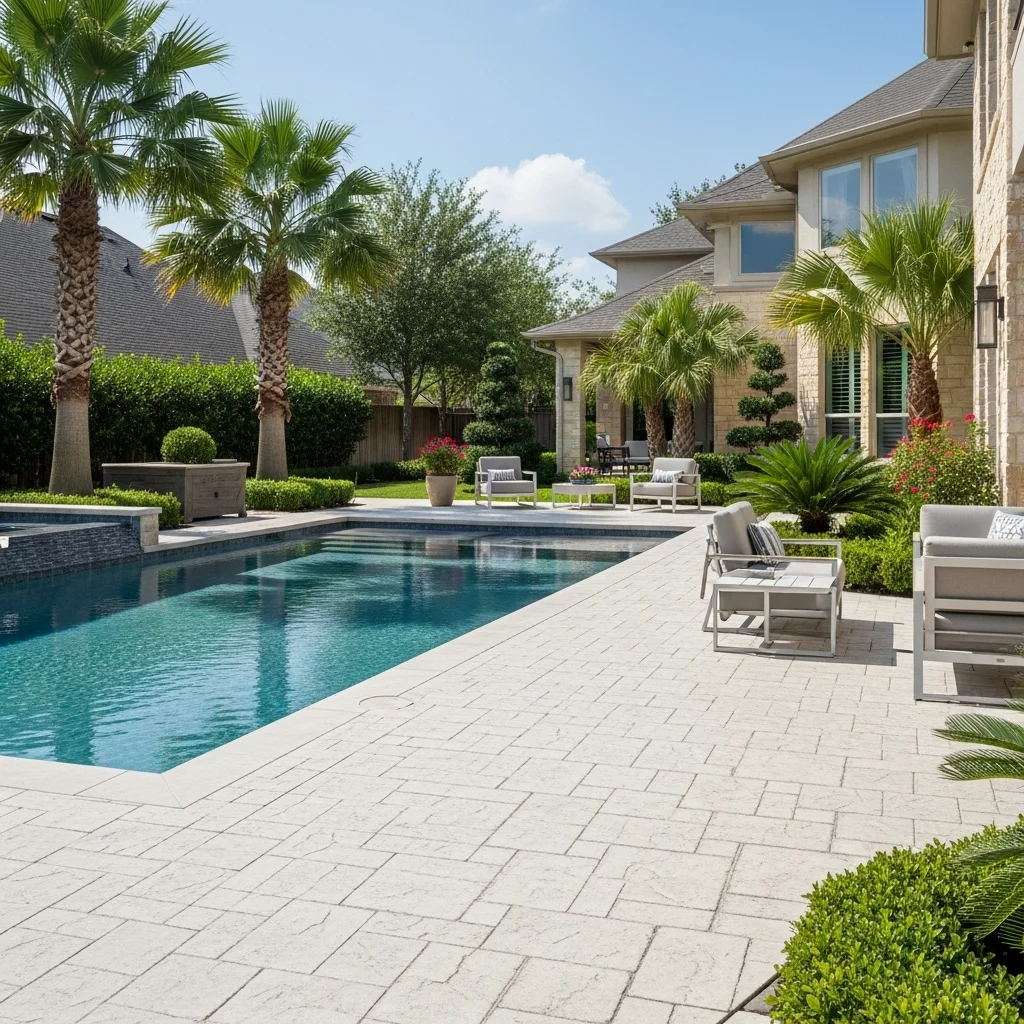
Houston Pool Cleaning provides the best pool deck cleaning services for concrete, pavers, travertine, and wood decks across Houston. Our certified technicians safely remove stains, restore traction, and revitalize your deck’s appearance. Most cleanings are completed in 2–4 hours.

WHY CHOOSE HOUSTON POOL DECK CLEANERS
We clean 500+ pool decks annually, and our team is CPO-certified and trained in surface restoration and pressure washing. Homeowners trust us because we deliver top-notch results while protecting your deck’s integrity and surrounding landscaping.
What Sets Us Apart
- Experienced technicians with pool operator certification and surface cleaning expertise
- Professional-grade pool deck pressure washing equipment with adjustable PSI settings
- Surface-specific cleaning solutions that remove stains without causing damage
- Complete sealing and protection treatment options are available
- Fully insured with property damage coverage
- 60-day clean surface guarantee

Why Does My Pool Deck Get Dirty So Fast in Houston?
Here’s the thing most people don’t expect. You clean the deck, it looks great for a few weeks, and then the green creeps back. The slippery film returns near the pool edge. The grout lines start darkening again. And you’re standing there thinking, did the cleaning even work?
It did. The problem is Houston itself.
This city runs hot and humid for eight to nine months a year. Average humidity sits around 75%. Afternoon rain is almost daily from May through September. And when you combine warm water, heat, and moisture on a porous surface like concrete or travertine, you’ve basically created a perfect incubator for algae and biofilm.
Add tree coverage from the pecan and oak canopies that shade backyards in Bellaire, Meyerland, Memorial, and West University, and you’ve got tannin staining on top of the biological growth. It’s not that your deck is uniquely dirty. It’s that Houston is uniquely challenging for outdoor surfaces.
That’s why professional cleaning, not just hosing down, is the only real solution here.

SIGNS When Your Pool Deck Needs Cleaning
Pool decks don’t have to look severely damaged to benefit from professional cleaning. These indicators tell you it’s time for service:
- Slippery Surface – Algae, mildew, or biofilm create dangerous slip hazards around the pool.
- Dark Staining – Dirt, rust, oil, or organic matter discoloring concrete or pavers.
- Green Growth – Algae and moss are spreading across deck surfaces and in grout lines.
- White Deposits – Calcium efflorescence or mineral buildup appearing on concrete surfaces.
- Faded Appearance – Sun damage, weathering, and dirt make the deck look worn and old.
Why Is My Pool Deck Turning Green or Slippery?
Homeowners across Houston notice that the deck looks fine, then one week of rain and heat, and suddenly there’s a green film near the pool steps, or the whole surface feels like a skating rink when wet.
Here’s what’s actually happening:
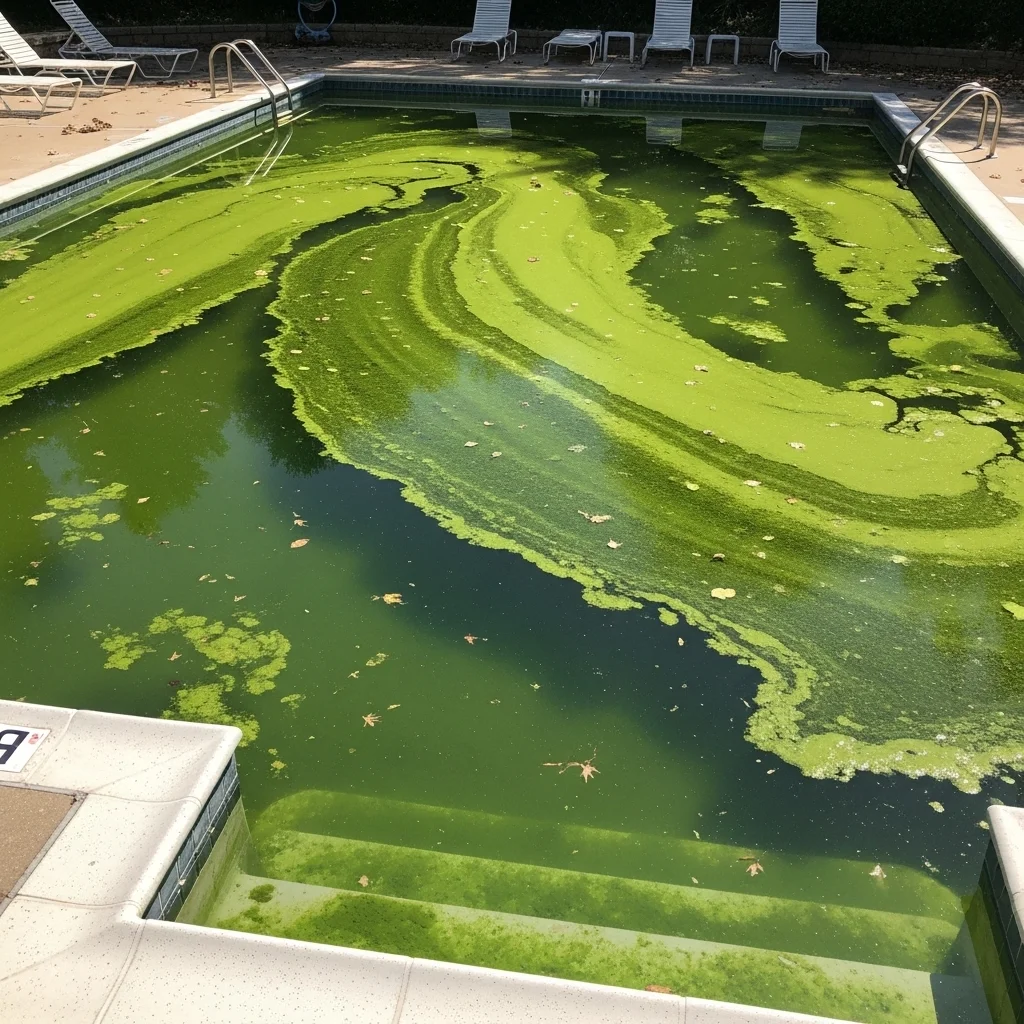
Algae and Biofilm Growth
Green discoloration is almost always algae. In Houston’s climate, green algae establishes on wet surfaces within days during summer. Black algae, which shows up as dark streaks or spots, is harder to remove and penetrates deeper into porous surfaces.
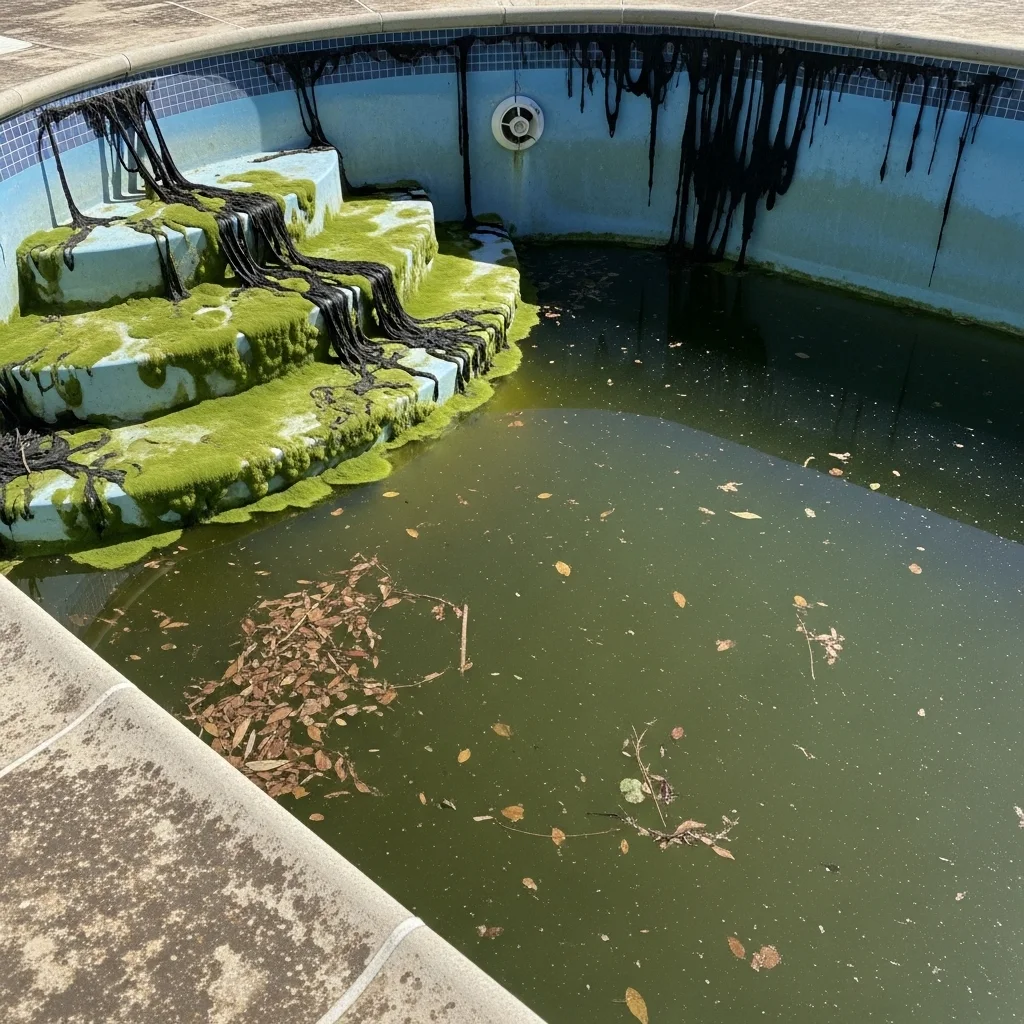
Mold and Mildew
Mildew appears as a gray or black patchy growth, typically in shaded or lower-traffic areas of the deck.
It thrives in the same humid conditions as algae and produces the same slippery surface effect.
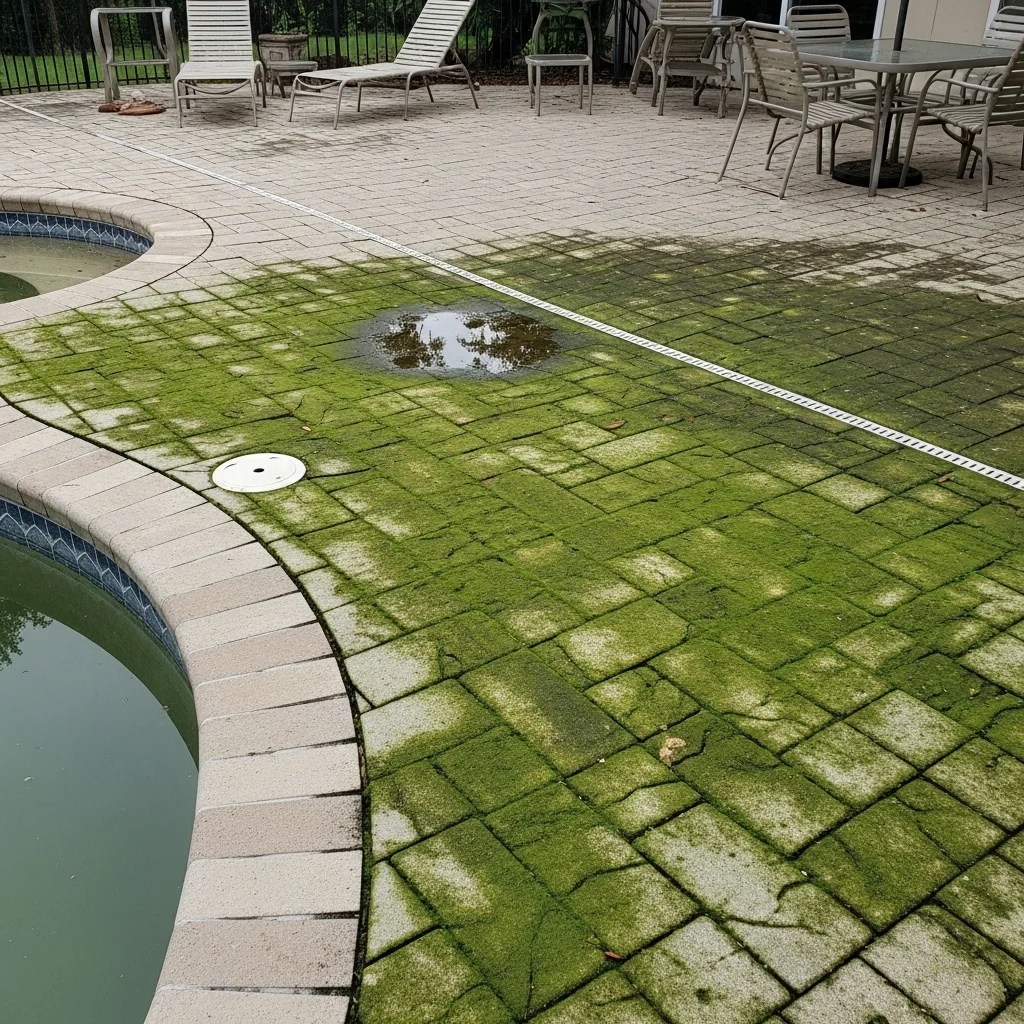
Why It Gets Slippery So Fast
The slipperiness comes from the biological film these organisms produce as they grow. That film acts like a lubricant on hard surfaces. Even a thin, nearly invisible layer of algae can make a wet concrete or paver deck dangerously slick. This is the single biggest safety concern with neglected pool decks.
How Do You Remove Mold or Algae From a Pool Deck?
Removing algae and mold from a pool deck correctly requires more than bleach and a garden hose. Here’s the real process:
Surface algae that haven’t penetrated deeply can often be addressed with a diluted algaecide pre-treatment followed by standard pressure washing. This works well for concrete and paver surfaces with recent growth.
Black algae and established biofilm need a longer-contact pre-treatment to penetrate the biological layer before pressure washing can be effective. Scrubbing with a stiff brush after pre-treatment and before rinsing helps break the adhesion on heavily affected areas.
Never use bleach or acid-based products on travertine. These will etch the surface permanently. pH-neutral algae removers applied with a low-pressure soft wash system are the correct approach for natural stone.
Wood requires oxygen-based cleaners rather than chlorine-based products. Chlorine bleach damages wood fibers and grays the surface faster. Soft washing with an appropriate wood cleaner restores the surface without raising the grain.
The algae you can see are usually just the surface layer. The root structure of black algae, in particular, penetrates porous concrete and grout. Without the right pre-treatment chemistry and sufficient contact time, you remove the visible layer but leave the root intact, and it grows back within weeks.
Common Pool Deck Problems In Houston, TX
These are the Common Pool Deck Problems Houston Homeowners Ask About
Why Does My Concrete Pool Deck Have White Crusty Deposits?
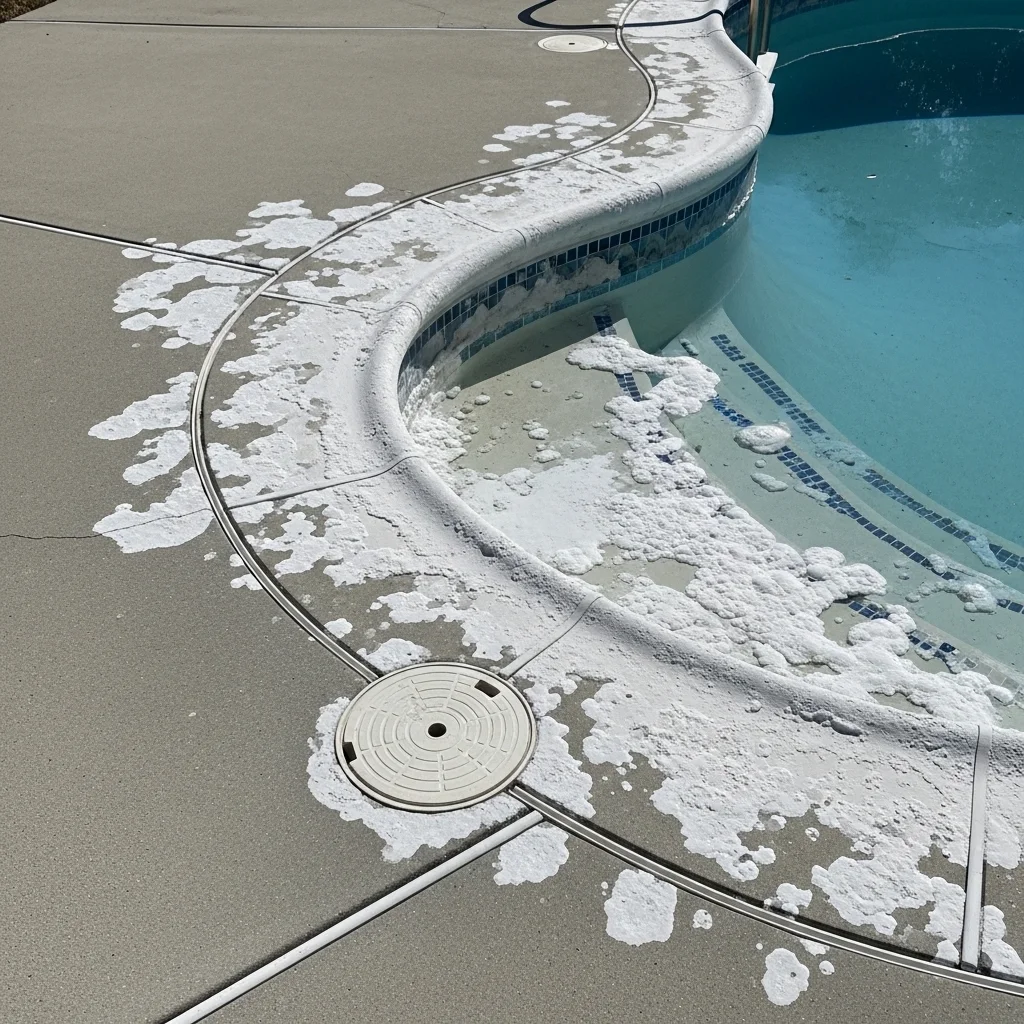
That’s efflorescence. It forms when water carries dissolved calcium and mineral salts through concrete as it dries and deposits them on the surface. Houston’s hard water and clay-heavy soil make this extremely common. Standard pressure washing won’t remove it. We use targeted mineral deposit treatments to clear efflorescence without damaging the concrete.
Why Does My Pool Deck Look Faded Even After Cleaning?
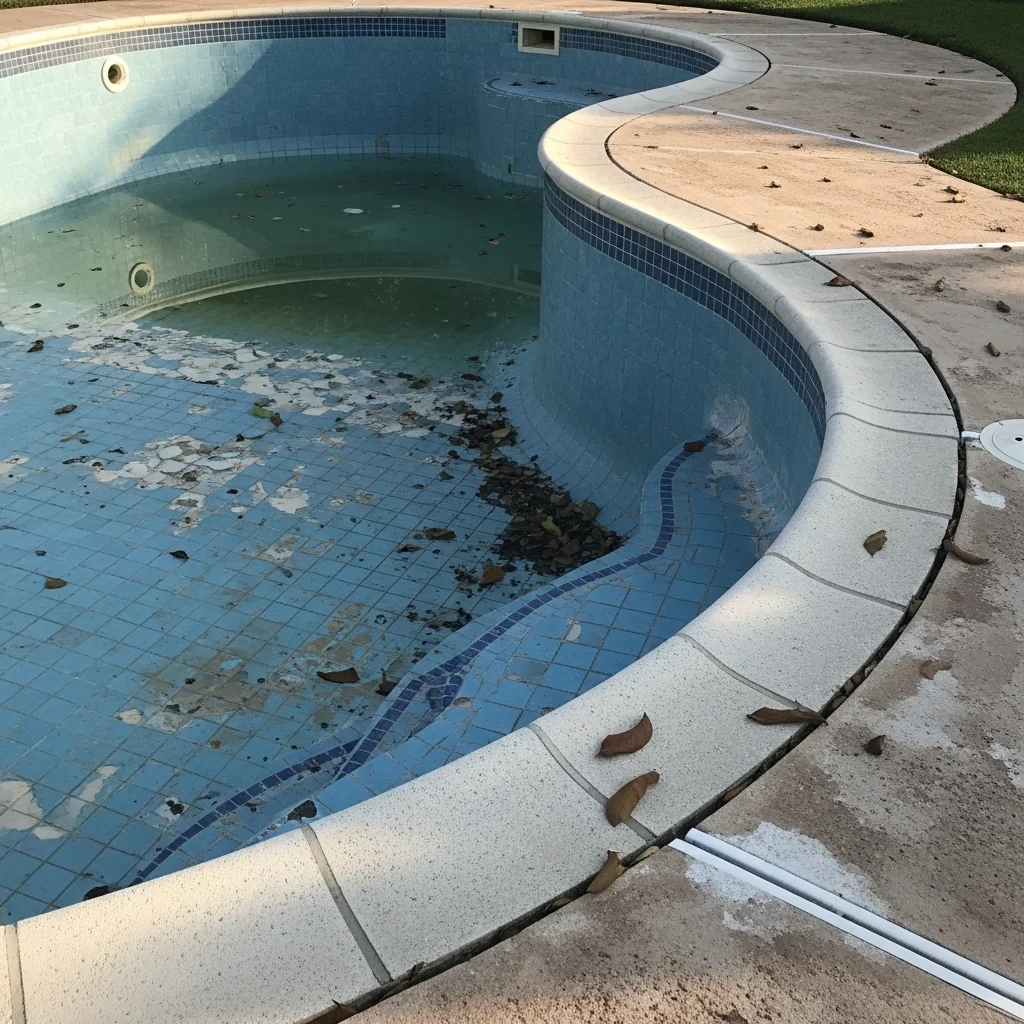
If the deck still looks dull after cleaning, the surface sealer has likely worn off. Sealer protects the color and porosity of concrete and pavers. Once it degrades due to UV exposure and weather cycles, the deck accumulates more dirt and looks permanently faded. A Clean and Seal package restores appearance and significantly extends how long the cleaned surface stays clean.
Can Pool Deck Cleaning Fix Rust Stains?
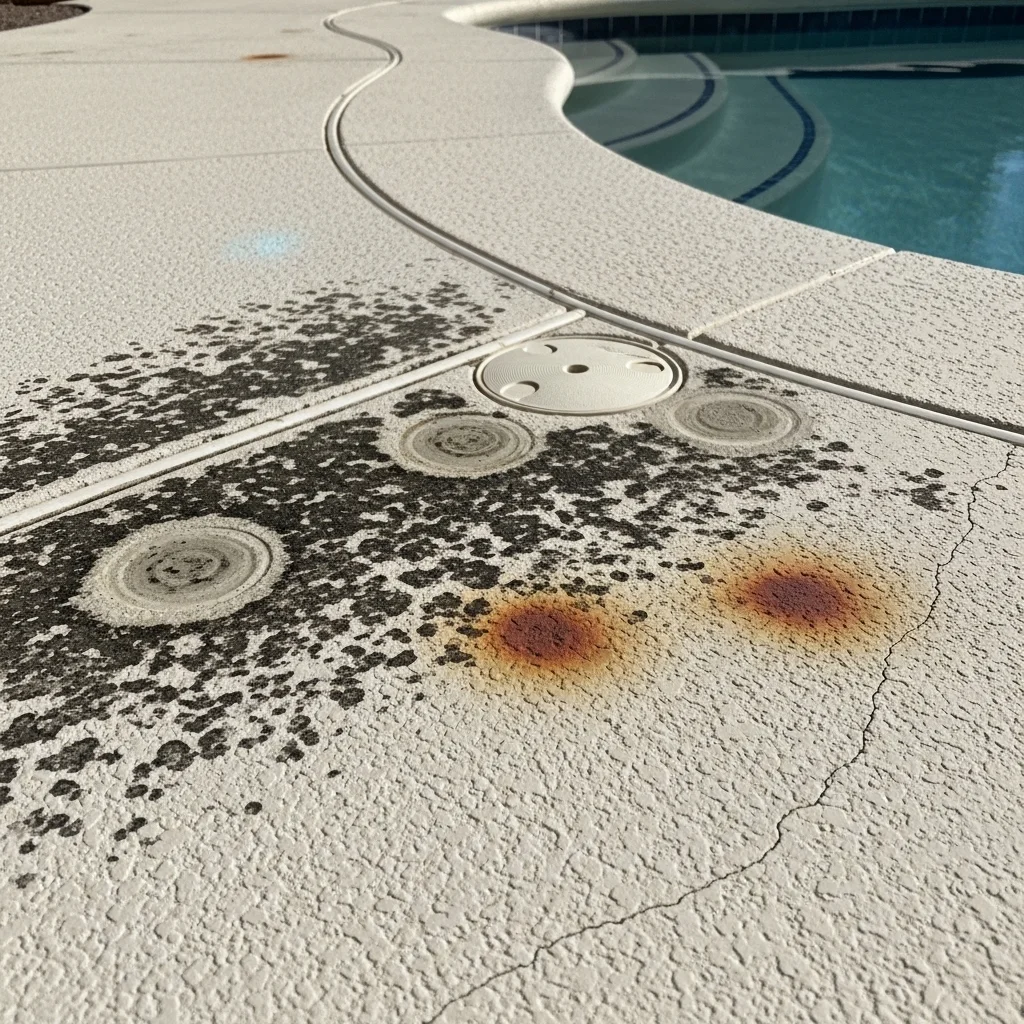
Rust stains from metal furniture, fixtures, or fasteners require a rust-specific oxalic acid treatment. Standard pressure washing moves surface rust but doesn’t lift the iron that has bonded with the concrete or stone. We treat rust separately as part of the stain removal service.
Why Do My Paver Joints Keep Growing Moss and Weeds?
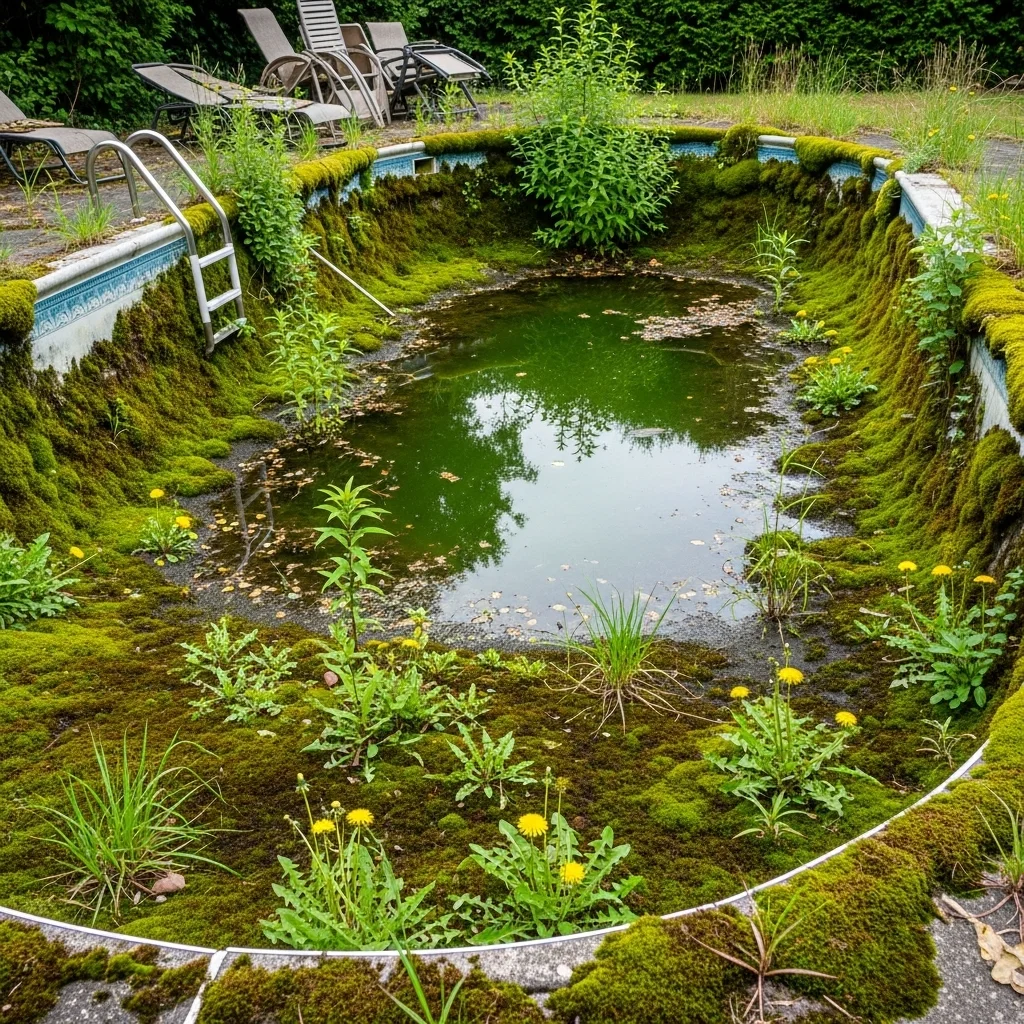
Organic material accumulates in paver joints over time and creates a growing medium for moss, grass, and weeds. Pressure washing clears the joints of organic buildup. For persistent joint growth, we can also address polymeric joint sand restoration to limit future organic settlement.
POOL DECK CLEANING PROCESS
- Surface Assessment & Preparation: When cleaning the pool deck, first inspect the deck material, identify stains or damage, and protect nearby plants, furniture, and pool equipment.
- Dry Debris Removal: Sweep and blow away leaves, dirt, and sand while clearing joints, cracks, and moving furniture for full access.
- Pre-Treatment Application: Apply surface-safe solutions to loosen oil stains, algae, mildew, and stubborn buildup.
- Pool Deck Washing & Deep Cleaning: Use professional pressure washing with surface-appropriate PSI to remove embedded dirt, grime, and growth.
- Final Rinse & Inspection: Rinse thoroughly, clean joints and grout lines, remove residue, and confirm a clean, slip-resistant finish..
Most pool deck cleanings are completed in 2–4 hours, depending on size and condition.

Swimming Pool Deck Surface Types We Clean in Houston
Our team is trained to clean and restore every mold pool deck surface safely:
Concrete Pool Decks:
Poured concrete and stamped concrete are the most common residential pool deck surfaces across Houston. Concrete is durable but highly porous, which means it absorbs staining compounds deeply. High-pressure cleaning with appropriate pre-treatment pulls embedded stains from the surface. Stamped concrete requires careful technique to preserve the decorative texture and pattern.
Paver Pool Decks:
Brick, stone, and concrete pavers require gentler pressure with focused joint attention. We clean paver surfaces without displacing jointing sand and flag any settling or shifting during the assessment. Clay soils in Fort Bend and Harris counties can cause pavers to move over time.
Travertine Pool Decks:
Natural travertine is popular in River Oaks, Tanglewood, and newer Sugar Land and Katy builds. It’s also the most vulnerable to improper cleaning. We use low-pressure soft washing with pH-neutral chemistry only. No acids, no high-pressure nozzles, no bleach products on natural stone.
Wood and Composite Pool Decks:
Wood decks deal with constant moisture exposure around pools, which causes mildew, surface graying, and fiber deterioration. We use oxygen-based soft washing to clean without raising the grain or accelerating weathering.
Service Options Available
- One-Time Deck Cleaning
- Spring Pre-Season Service
- Fall Post-Season Cleaning
- Monthly Maintenance Plans
- Pressure Washing Only
- Clean & Seal Package
- Stain Removal Treatment
- Custom Cleaning Schedules
Is Pool Deck Cleaning Necessary for Safety?
Absolutely. This is probably the most important question on this page.
An algae-covered pool deck isn’t an aesthetic problem. It’s a liability. Wet pool decks are already a slip risk. A wet pool deck with active algae or biofilm growth is significantly more dangerous because the surface coefficient of friction drops substantially once biological film establishes.
Who Is Most at Risk when the deck can’t be cleaned
Children running to and from the pool, elderly guests moving from the pool to seating areas, and anyone transitioning from water to a hard surface without looking down are the highest-risk groups. Poolside falls are a leading cause of head and orthopedic injuries around residential pools.
The Legal Side for Houston Homeowners
Texas premises liability law holds homeowners responsible for maintaining reasonably safe conditions for guests. A pool deck with visible algae growth or known slippery surfaces creates real exposure if someone is injured on your property.
What Clean Actually Means for Safety
A properly cleaned pool deck restores the surface texture of the material. Concrete and pavers have built-in aggregate texture that provides traction when clean. That texture disappears under algae and biofilm. Cleaning doesn’t just make the deck look better; it restores the slip resistance the material was designed to provide.
How Often Should a Pool Deck Be Cleaned?
Most Houston homeowners need a professional pool deck cleaning every six to twelve months. That’s the honest range for this climate. If you’re seeing green growth, slippery patches, or dark staining, you’ve already waited too long
Every 6 Months
You should clean more frequently around every six months if your deck gets heavy foot traffic during pool season, if you have mature trees dropping leaves, sap, or debris nearby, or if your deck is in a shaded area that stays damp longer after rain. Properties near Memorial Park, the Brays Bayou corridor, or in neighborhoods with dense oak canopies typically fall into this category.
Annually
An annual cleaning is usually enough if your deck gets moderate use, sits in a mostly sunny location, and you do basic maintenance like sweeping and rinsing between professional visits.
Quarterly
Commercial pool decks, community pools, and high-use residential pools with large families or frequent entertaining benefit from quarterly service. A monthly cleaning plan makes the most sense for these situations since each visit stays shorter and less intensive
TOOLS & BRANDS WE TRUST
We work with industry-leading brands to ensure the best results and longest filter life. Our technicians follow strict safety procedures, use PPE during handling, and neutralize cleaning solutions on-site to clean stain pool deck.