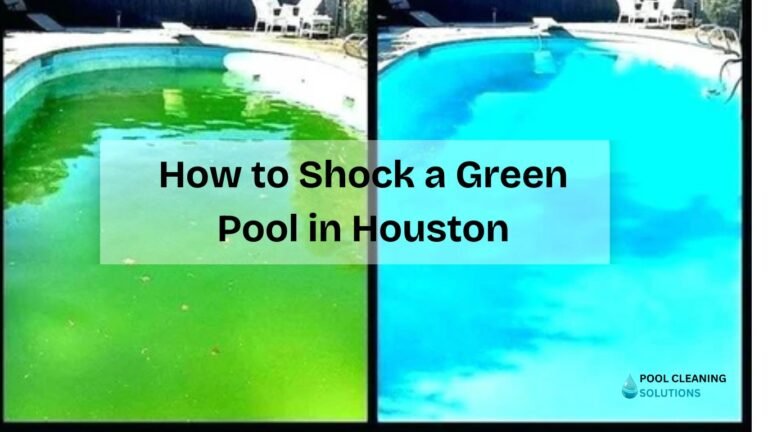
The fastest way to clean a green pool in Houston is a four-step sequence: remove debris, test and correct pH, shock at night with a double or triple dose, then run your filter 24/7 until clear. A moderately green 20,000-gallon Houston pool takes four to five days to fully clear, not 24 hours, despite what many guides claim.
Houston’s 90°F+ summers and year-round humidity make algae grow faster here than in most U.S. cities, which means the fix also requires more chemical aggression than standard national guides recommend.
Why Houston Pools Turn Green So Fast
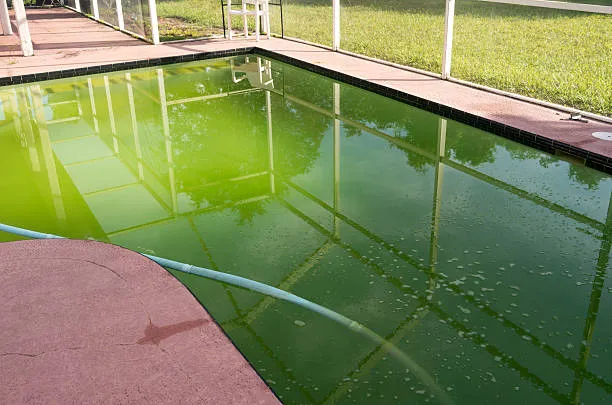
Before you treat the problem, you need to understand what caused it. In Houston, green pools almost always trace back to one or more of these triggers:
| Trigger | What It Does to Your Pool |
| UV Heat (90°F+) | Burns off free chlorine in 24 to 48 hours |
| High Humidity | Creates constant algae-friendly conditions |
| Heavy Rain | Dilutes chemicals, washes in phosphates |
| Oak Pollen | Consumes chlorine, feeds algae growth |
| Storm Debris | Adds organic load that depletes sanitizer |
| Missed Service | Removes the only line of consistent defense |
Algae spores are always present in pool water. They are invisible and harmless when your chlorine is in range. The moment chlorine drops too low, those spores activate and multiply fast.
The Fastest Way to Clean a Green Pool in houston: Step by Step process
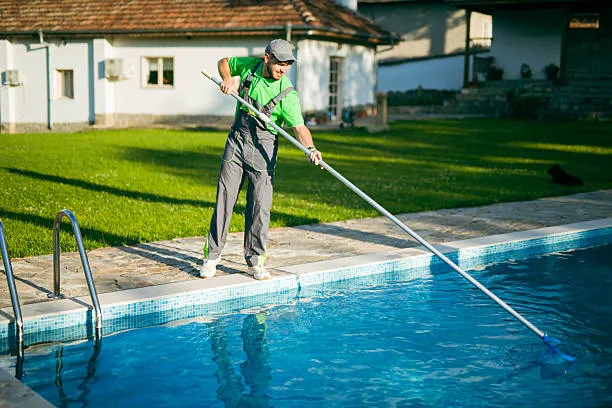
There is no true 24-hour fix for a green pool. Realistically, a moderate green pool cleaning takes four to five days to fully clear. You will see major improvement within the first 24 hours if you follow every step correctly.
Step 1: Remove All Debris First
Skim out every leaf, insect, and visible piece of debris before adding any chemicals. Organic material consumes chlorine and slows the entire process down.
Step 2: Test Your Water
Check pH, chlorine, and alkalinity before you shock. Your pH needs to be between 7.2 and 7.6 for shock to work efficiently. High pH makes chlorine up to 90% less effective.
Step 3: Brush Every Surface
Brush walls, floor, steps, and corners thoroughly. This breaks the protective layer off algae colonies and exposes them to the chemicals you are about to add.
Step 4: Shock the Pool at Night
Add shock after sunset. Sunlight burns off chlorine during treatment, wasting your chemicals and your time. For a moderate 20,000-gallon Houston pool, you will likely need at least six pounds of shock to start.
Shock a green pool at double or triple the standard dose for green water. A light dose will not do the job.
Step 5: Run Your Filter 24/7
Do not turn your pump off until the water is clear. Run it continuously, day and night. As the filter captures dead algae, pressure will rise. Backwash or clean the filter whenever pressure climbs 8 to 10 PSI above your normal baseline.
Step 6: Vacuum the Dead Algae
As algae dies, it turns gray-white and sinks to the floor. Vacuum it out manually. Automatic cleaners can kick up the settled debris and re-cloud the water instead of removing it.
Step 7: Retest and Rebalance
Once the water clears, test your chemistry again. Adjust chlorine, pH, and alkalinity back to normal range before anyone swims.
Green Pool Recovery Timeline in Houston
| Timeframe | What You Should See |
| 24 hours | Water shifting from deep green to lighter green or hazy |
| 48 hours | Noticeably clearer, algae dying and settling |
| 72 hours | Water approaching blue, dead algae on floor |
| 4 to 5 days | Fully clear if chemistry is maintained throughout |
If your water is not improving after five days, you likely have a filter problem or a chemistry issue that needs professional diagnosis. For in depth view you can check swimming pool cleaning guide.
How to Diagnose Your Green Pool Before You Treat It
Not all green pools are the same problem. The shade tells you a lot before you even test the water.
Light green or hazy:
Early-stage algae. Caught early, this clears up faster. Chlorine levels dropped recently and algae just got started.
Medium green and cloudy:
Active bloom. Chlorine has been low for several days. This takes a proper shock treatment and two to three days of filtering to clear.
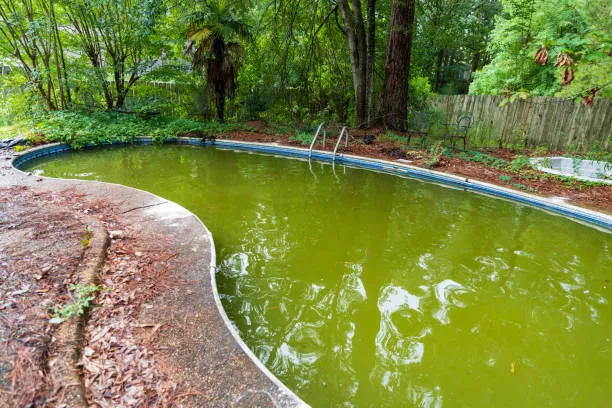
Dark green, swamp-like:
Advanced bloom. Algae has colonized the walls, floor, and filter. This level often requires a professional swimming pool cleanup, not a DIY shock.
Clear but green-tinted:
Possibly copper oxidation from an older heater or low-quality algaecide. Shocking will not fix this. A water test is required first.
When to Call a Professional Instead of DIY
Some green pool situations are beyond what a store-bought shock treatment can fix.
Call a Pool Cleaning professional when:
- The water is dark green or black and visibility is zero
- You have shocked twice with no visible improvement
- You suspect the filter or pump is damaged
- Black or yellow algae is present on the walls (these require different treatment protocols)
- The pool has been sitting green for more than two weeks
Advanced algae blooms require professional-grade treatment, proper vacuum equipment, and in severe cases, an acid wash of the pool surface. Trying to DIY a swamp-level green pool usually extends the timeline and increases the final cost.